How Much Does a Personal Trainer Cost Canberra
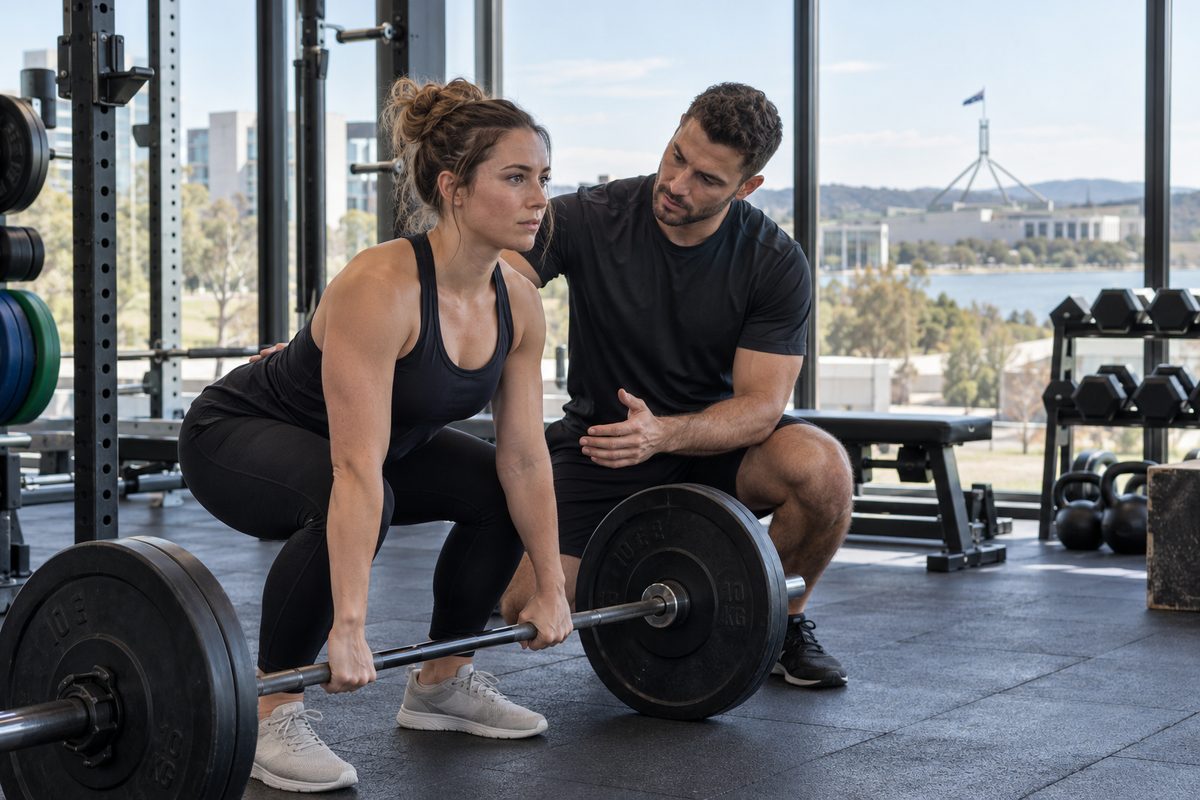
A personal trainer in Canberra costs between $70 and $120 per one-on-one session, with most clients paying around $85 to $95 an hour. Group sessions bring the price down to $35 to $55 per person. Online coaching with weekly check-ins runs $150 to $250 a month. Where you land in that range depends on the suburb you train in, whether you use a big gym chain or an independent coach, and how you structure your payments.
What Actually Changes the Price in Canberra?
Location moves the number more than people expect. Trainers in Civic and Barton often charge at the top of the range because rent and demand for in-home sessions push prices up. Suburban gyms in Gungahlin, Belconnen, and Tuggeranong tend to sit closer to $70 to $85 because overheads are lower and competition between studios keeps pricing in check.
One of my clients in Gungahlin paid $75 a session at a local gym. A friend of hers in Barton paid $110 for a trainer who travelled to her home office twice a week. Same qualifications. Same style of coaching. The only real difference was postcode and whether the trainer had to factor in travel time.
Experience and certification level also shift the number. A trainer with a Certificate III and IV in fitness and two years of coaching will usually sit in the $70 to $85 bracket. A trainer with a strength training specialisation, a sports science degree, or ten years working with rehab clients will charge $100 or more, because clients are paying for judgement, not just a set of instructions.
Is Gym-Based Training Cheaper Than Hiring an Independent Trainer?
Not always, and this is where a lot of people get caught out. Big chains like Anytime Fitness run on a subscription business model. The gym membership itself is cheap, often $15 to $25 a week, and that low number is what gets advertised. Personal training sits on top as a separate add-on fee, usually $60 to $80 per session when bought in a block of ten or more.
Add the membership and the training together and you can end up paying more than you would with an independent trainer who charges a flat $85 and includes gym floor access as part of the deal. I had a client compare both options side by side. The Anytime Fitness package looked cheaper on the sign-up page. Once she added the $18 weekly membership to the $65 per-session training fee, she was paying more per month than the independent trainer down the road who charged $80 flat with no extra membership cost.
Independent trainers who rent space in a smaller studio or train clients outdoors skip the subscription layer entirely. You pay for the session and nothing else.
Why Has Demand for Personal Trainers Spiked Across the ACT?
Demand in the ACT has grown faster than in most other states over the last few years. Canberra has one of the highest average incomes in Australia, which means more residents can afford to pay for structured coaching instead of trying to figure out strength training and weight loss on their own through free apps and YouTube videos.
Population growth in outer suburbs like Gungahlin has also pushed demand up locally. New gyms have opened in that area specifically because the suburb grew fast and the existing studios couldn't handle the number of new residents wanting sessions. When demand rises faster than the supply of qualified trainers, prices creep up too. That's part of why some Gungahlin gyms that used to charge $65 now sit closer to $80.
Does Insurance Cover Any of This?
No. Private health insurance in Australia does not cover personal training sessions, in the ACT or anywhere else. I get asked this constantly by new clients who assume their extras cover will soften the cost. It won't, because personal trainers are not a registered allied health category under private health funds.
There is one exception worth knowing. If a GP refers you to an exercise physiologist under a chronic disease management plan, Medicare can subsidise a handful of sessions. That is a completely different service to personal training, delivered by a different qualification, and it is not something you can swap out for a regular PT session at your local gym. If weight loss or strength training is your goal and you don't have a diagnosed chronic condition, you are paying out of pocket, full stop.
What Should You Actually Get for $85 an Hour?
A proper session should include a program built around your goal, not a random set of exercises pulled from memory. If weight loss is the target, a trainer should be tracking more than just the scale. I always tell new clients that if someone only weighs you and never measures strength progress, they're not giving you the full picture.
When I coach for weight loss, strength training sits at the centre of the program, not cardio. Here's what I found works, confirmed across years of working with clients in Canberra: people who build muscle through structured strength training keep weight off longer than people who rely on treadmill sessions alone, because muscle raises resting metabolic rate. A $85 session that includes progressive strength work, form correction, and a plan for what to do between sessions is worth more than a $65 session where you're handed a generic sheet and left to guess.
Per-Session vs Package Pricing: Which Saves More?
Packages almost always lower the per-session cost. A single session might cost $95, but a block of 20 often brings that down to $75 to $80 per session. The saving is real, but it comes with a risk.
I remember when one of my clients bought a 20-session pack upfront to lock in the discount. Six weeks later, the trainer left the gym for a job interstate. The gym offered a replacement trainer, but the new coaching style didn't suit her at all, and the studio wouldn't refund the unused sessions. She ended up finishing the pack out of obligation rather than enthusiasm, which defeated the purpose of hiring a trainer in the first place.
Before buying a large package, ask what happens if the trainer leaves or if you need to pause for injury. A good studio will let you freeze sessions or transfer them. If they won't put that in writing, that's a warning sign no discount is worth ignoring.
How Do You Avoid Overpaying for a Personal Trainer in Canberra?
Ask for the trainer's actual qualifications before you book, not just their Instagram following. A Certificate III and IV in fitness is the baseline. Anything beyond that, like a strength training specialisation or a degree in exercise science, justifies a higher price, but only if they can explain how it changes your program.
Book a single trial session before committing to a package, even if it costs slightly more per session. This is the only way to know if the coaching style fits before you're locked into ten or twenty sessions.
Compare the full cost, not the advertised number. If a gym's pricing page lists personal training at $60, check whether that includes gym membership or sits on top of a separate subscription fee. The headline price and the real monthly cost are often two different numbers.
Calculate the per-session rate across every package size the studio offers, not just the one they push hardest. Sometimes the ten-session pack and the twenty-session pack land at nearly the same per-session price, which means there's no real reason to commit to the bigger, riskier option.
Action point: before you sign up with any trainer in Canberra, ask for the exact per-session cost across every package size they offer, confirm whether gym membership is included or separate, and book one trial session before paying for a block. That single comparison will tell you more about real value than any price listed on a website.