Personal Trainer vs Gym Membership
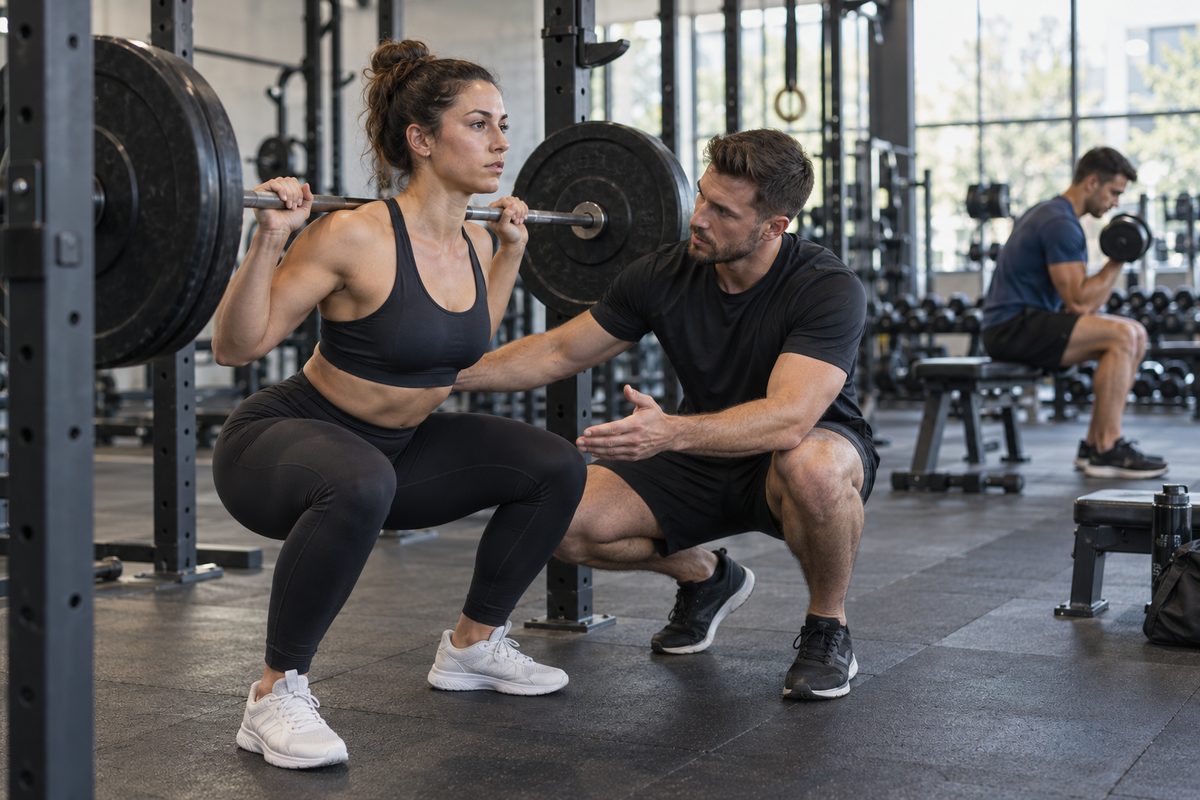
A personal trainer teaches you how to train safely and build real strength, while a gym membership only gives you a room full of equipment and no instructions. People treat this like a competition between two rival products. It is not a competition. A gym membership is a tool. A trainer is the person who shows you how to use that tool so your body actually changes instead of your bank account just draining every month. The real question is not which one wins. It's which one you need right now, and whether you need both at different stages.
What Does a Gym Membership Actually Buy You?
It buys you access to space and equipment. Nothing else.
A membership gets you through the door of a health club with racks, machines, and open floor space. You get treadmills and bikes for aerobic exercise. You get barbells and dumbbells for strength training. What you do not get is a plan, a correction, or anyone checking if your form is about to wreck your lower back. The equipment does not care about your goals. It just sits there.
One of my clients paid for a health club membership for two years and used it four times. She was not lazy. She walked in, looked at forty machines, and had no idea where to start. She needed someone to hand her a plan the second she walked through the door, not a tour of the building. That is the gap a membership alone cannot fill.
What Does a Personal Trainer Add That Equipment Can't?
A trainer adds a plan, correction, and a path forward. A rack of dumbbells cannot do any of that.
A professional fitness coach builds your program around your body, your injury history, and your actual goals, not a generic plan pulled off a poster on the wall. They teach progressive overload, which just means adding a little more weight or a few more reps over time so your strength training actually keeps working instead of stalling after month two. Most people who train alone never do this on purpose. They repeat the same weight for a year and wonder why nothing changes.
When I started training clients, half of the first session was fixing how someone moved before I let them touch any real weight. A squat with the knees caving in does not get fixed by more reps. It gets fixed by someone watching it happen and stopping it before it becomes a habit, or an injury.
Look for a trainer certified through a body like the National Academy of Sports Medicine. That certification is not a guarantee of greatness, but it is proof they learned anatomy, program design, and how to coach someone through exercise without guessing.
How Much Does Each Option Really Cost Over a Year?
A gym membership runs roughly 240 to 720 dollars a year. A trainer, even at one session a week, runs closer to 2,600 to 5,200 dollars a year.
On paper the membership looks like the obvious winner. It is five to ten times cheaper. But the return on investment is not measured in dollars per month. It is measured in results per dollar. A membership that sits unused for two years has a return on investment of zero. A trainer who gets you lifting correctly in three months and prevents a back injury that would have cost you physical therapy bills has a return that a cheap membership can never match.
I know this because I had a client who spent four years paying for a membership and gained almost nothing. She hired a coach for three months, learned the basics of strength training and progressive overload, and kept making progress alone for two years after that. The membership cost less. The trainer is what actually worked.
Who Should Skip the Trainer and Train Alone?
Anyone who already understands proper form, has years of training history, and just needs a place to lift.
If you trained through college sports, know what progressive overload feels like, and can tell the difference between a good squat and a bad one without a mirror, a gym membership alone works fine. You don't need to pay someone to tell you things you already know. Your physical fitness in this case is already built on a solid base. What you need is equipment access, not education.
Who Needs a Trainer Before They Touch a Single Weight?
Beginners, anyone with a past injury, and anyone who has tried and failed to make progress alone before.
I remember one client who came to me after a back injury from years earlier. She was scared to lift anything heavier than a grocery bag. Handing her a membership card would have done nothing but confirm her fear. She needed someone to rebuild her movement patterns slowly, prove to her body that loading weight was safe again, and watch every rep until trust was rebuilt. Exercise without guidance in a situation like that does not just fail to help. It can turn a healed injury into a new one.
If you've bought a membership before, used it for three weeks, then quietly let it lapse, that is a pattern worth noticing. The problem usually was not motivation. It was not knowing what to do once you got there.
Can You Use Both Without Wasting Money?
Yes. The smartest move for most people is to start with a trainer and graduate into independent gym membership use.
Buy a short block of sessions, somewhere around eight to twelve, and use that time to learn real programming. Learn how progressive overload works in practice. Learn to mix aerobic exercise with strength training in a way that actually fits your goals instead of copying whatever plan is trending. Once that foundation is set, you keep the membership and drop the hourly trainer cost.
I tell every new client the same thing. I am not trying to keep you forever. I am trying to make myself unnecessary in about three months. That is the honest version of the job. A trainer who wants you dependent forever is not thinking about your results. They are thinking about their income.
What Happens When You Pick the Wrong One for Your Situation?
You lose money either way. Pay for a trainer you didn't need, and you overspent on information you already had. Buy a membership when you needed guidance, and you underspent on the one thing that would have kept you safe.
This happened to a friend of mine. She joined a gym after a long break from exercise, loaded a barbell the way she remembered from years earlier, and strained her lower back in the first week. No one was there to correct her form before it mattered. A single session with a coach would have cost less than the physical therapy that followed. That is the real cost of guessing wrong.
What Should You Actually Do Right Now?
Be honest about where you stand before you spend a dollar. If you have never trained with proper form, or you are carrying an old injury, book a few sessions with a professional fitness coach first and treat the membership as the second step, not the first.
",