Small Group Personal Training
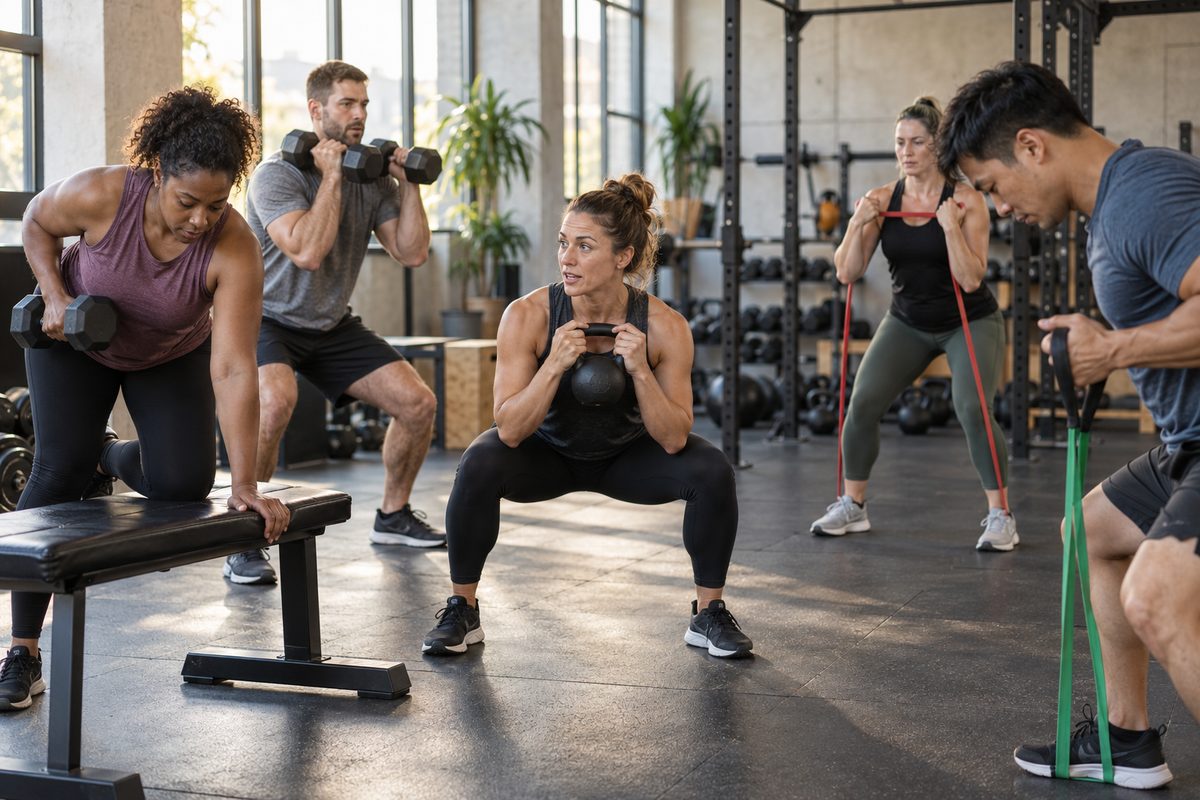
Small group personal training puts three to eight people under one coach who builds the workout, watches your form, and adjusts the load for each person in real time. It sits between a one-on-one session and a packed gym class. You get less individual attention than a private trainer, but far more than you get standing in the back row of a 30-person class hoping someone notices your knees cave in on a squat.
What Actually Happens in a Small Group Session?
A coach runs one program for the whole group, then changes the weight, reps, or movement for each person based on what they can handle. Everyone does the same workout structure. Nobody does the exact same exercise at the exact same intensity.
When I ran small group sessions, I'd have one person doing goblet squats with a 12kg kettlebell and another doing barbell back squats, both inside the same circuit training block. The clock and the format stayed identical. The load didn't. That's the whole point of the model. A coach who can't do this is just running a class and calling it something else.
Most sessions follow a circuit training or interval training structure because it's the easiest format to scale across different fitness levels at the same time. Everyone moves through stations. Everyone rests on the same clock. The coach walks the room correcting form and bumping up weight for anyone who's ready for it.
How Is This Different From High-Intensity Interval Training Classes at a Regular Gym?
The format can look the same from across the room. The coaching underneath it is not. A HIIT class instructor at a big gym is managing 20 to 40 people and running a pre-set routine. A small group personal training coach is managing 3 to 8 people and adjusting that routine person by person, rep by rep.
I once covered a HIIT class of 35 people as a favor to another trainer. I could not see half the room properly during the first five minutes. In a small group session with six people, I see every rep. That difference matters most during high-intensity interval training, where fatigue wrecks form fast and bad form under fatigue is exactly how people get hurt.
Strength training inside small group sessions also gets programmed with actual progression in mind. A HIIT class repeats the same circuit for six weeks because it has to work for everyone in the room, including people who showed up for the first time that day. A small group coach tracks what each person lifted last week and pushes progressive overload on purpose, adding weight or reps in a planned way so strength keeps climbing instead of plateauing.
How Much Does Small Group Personal Training Cost?
Cost usually lands between $25 and $50 per session in the US, depending on the market and group size. One-on-one personal training runs $60 to $120 per session in most cities. A standard gym class membership costs less, often $15 to $30 per session, but comes without individual coaching.
Here's the math that actually matters. A trainer splitting their hourly rate across four clients in a small group can charge each person less than a quarter of their private rate while still earning more per hour than they would from one private client. That's why the pricing works out lower for you without the coach taking a pay cut. It's not a discount. It's a different business model, and it's the reason small group training exists at all.
I had a client who dropped from private sessions to a small group format and cut her monthly spend by 60 percent. Her results over the next three months were close to identical. She lost more body fat in the group setting, mostly because she showed up more often since the cost stopped being a stress point every time she checked her bank account.
Does Training in a Group Actually Build Strength, or Just Burn Calories?
It builds real strength when the coach programs for it. The format alone doesn't decide this. The programming does.
A group session built around circuit training with bodyweight moves and light dumbbells will improve physical fitness and endurance but won't build much strength. A group session built around barbell squats, deadlifts, and presses, with each person tracked on their own progressive overload plan, builds strength the same way one-on-one training does. I know this because I ran both formats with the same group of clients over two separate 8-week blocks. Max lifts went up in the strength-focused block and stayed flat in the circuit-only block. Same people, same effort, different programming.
Ask what a typical session looks like before you join. If every answer involves battle ropes, burpees, and a timer with no mention of weight progression, you're buying cardio and calling it strength training. That's fine if cardio is your goal. It's a problem if you walked in wanting to get stronger.
How Do Coaches Keep Six People Safe and On Track at Once?
They use their eyes first, then wearable technology to fill the gaps their eyes can't cover. A coach watching six people can catch bad squat depth or a rounded back on a deadlift in real time. What they can't do is know your heart rate mid-interval just by looking at you.
That's where a heart rate monitor earns its place in the room. Good small group setups have members wear one during interval training blocks, often displayed on a screen so the coach can see who's working too hard and who's coasting. I've had sessions where a client's heart rate monitor flagged she was barely above resting during what should have been an all-out interval. That told me more in two seconds than ten minutes of watching her move would have.
This is the detail most people miss when they compare group training to solo workouts with an app. An app can log your reps. It can't watch your heart rate climb during a set and tell you to back off before you're in trouble. A coach in the room, backed by a heart rate monitor on your wrist, catches that in real time.
Who Gets the Most Out of This Format?
People who need accountability more than they need constant one-on-one correction get the most value here. If you know your squat form is solid and you just need someone to program your week and keep you showing up, small group training does that job at a third of the private rate.
One of my clients joined a small group program after years of training alone with no structure. He wasn't hurt. He wasn't a beginner. He just needed someone else deciding what he'd do each day instead of defaulting to the same three exercises every time he walked into the gym. Six months in, his lifts were up across the board and he'd stopped skipping sessions, because showing up meant showing up for five other people too, not just himself.
Who Should Skip Small Group Training?
Anyone recovering from a recent injury or dealing with a technical form issue that needs constant one-on-one cueing should start with private sessions first. A coach splitting attention six ways can't give you the second-by-second correction a new injury sometimes needs.
I turned away a client with a recent shoulder surgery from our small group program for this exact reason. He needed someone watching his shoulder on every single rep for the first month. We put him in private sessions until his range of motion cleared, then moved him into the group once the risk dropped. That sequencing protected him and it was the right call even though he wanted to start cheaper right away.
What Should You Do Next?
Book a trial session before you commit to a package. Watch how the coach handles the person in the room who's clearly struggling. If the coach adjusts weight and form for that person without slowing the whole group down, you've found a program worth your money. If everyone does the identical exercise at the identical weight with no adjustments, you've found a class wearing a small group label, and you should keep looking.